


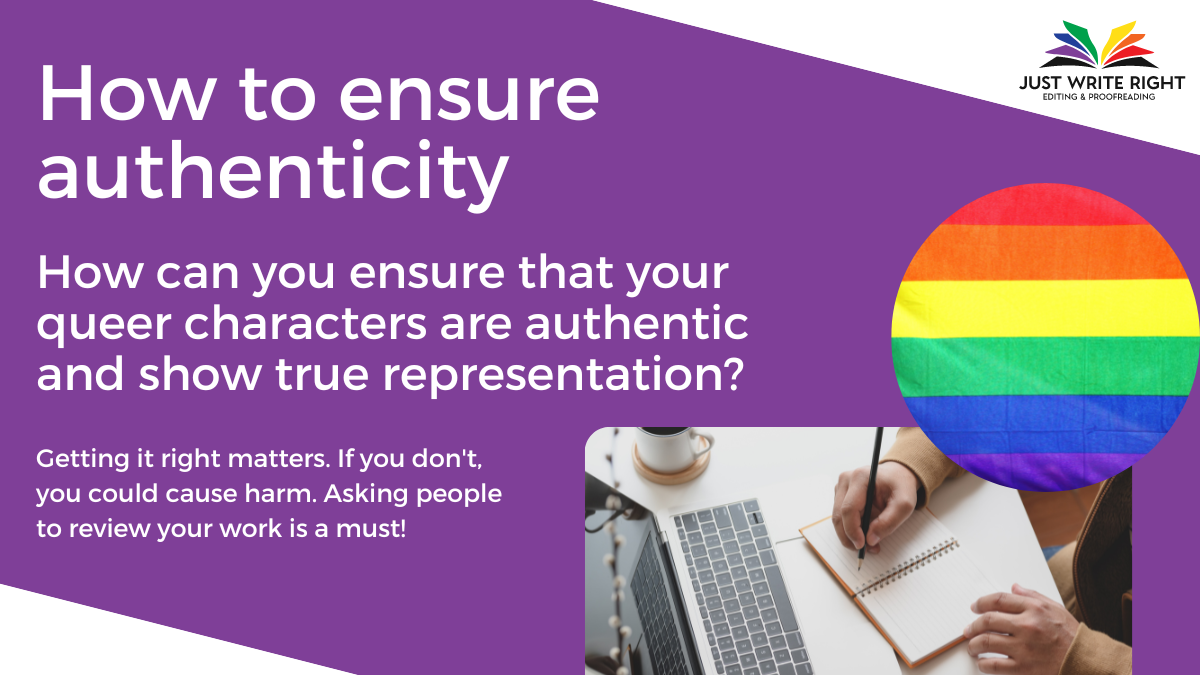
Having queer characters in books can be a powerful tool for authenticity and representation for readers, but it’s important to ensure that these characters are accurately portrayed. Queer characters should not be tokenised or used as a plot device, but rather should be fully developed and three-dimensional characters. By ensuring authenticity in your queer characters, you can help create a more inclusive world for readers.
What makes a character queer?
When it comes to queerness, there are many factors to consider. For some, it might be how they dress or the way they act. It could be how they express themselves or who they choose to love. Ultimately, what makes someone queer is up to them and no one else.


There are plenty of misconceptions about what it means to be queer and often people try to put others into boxes that they don’t fit. But queerness is fluid and ever-changing. There is no one right way to be queer.
For many people, queerness is a way of life and a part of their identity. It’s something that is always with them, no matter what anyone else says. And that’s perfectly okay.
The importance of authenticity in LGBTQ+ representation
When it comes to LGBTQ+ representation in the media, authenticity is key. It’s vitally important that the stories and portrayals we see of queer people are accurate and reflect the real lives of queer people. This is why it’s so important that LGBTQ+ creators are involved in the creation of LGBTQ+ content. They can ensure that stories are true to life and that they reflect the diversity of the queer community.
This is especially important when it comes to stories that explore queer romance and relationships. Often, queer relationships are portrayed in a negative or stereotypical way. This can be damaging and harmful to the queer community. It can send the message that queer relationships are somehow wrong or inferior to straight relationships. Authentic queer representation can help to counter these harmful messages and show the world that queer relationships are just as valid and worthy of respect as any other kind of relationship.


Tips for writing and editing queer characters
Here are some things to think about when writing queer characters:
- Queer characters must be written with care and authenticity.
- Avoid stereotypes and clichés.
- Ensure queer characters are well-rounded and three-dimensional.
- Write the character’s story, not yours.
- Seek feedback from other queer writers.
- Be willing to do revisions.
- Have patience and be open to feedback.
- Be proud of your work.

Queer characters in books can play a powerful role in creating a more inclusive world for readers. By ensuring authenticity in your queer characters, you can help readers see themselves reflected in the stories they read.
Nick (he/him) is an experienced, professional editor and proofreader, specialising in LGBTQ+ writing. Use this form to get in touch right now!
Thank you for your response. ✨
Receive my newsletter, Editing Queeries!
Your support helps!


Your Ko-fi donations help keep me blogging about writing and editing. They also ensure that I can create and provide free resources for editors and writers. Please consider buying me a cuppa!


Editorial services for fiction and non-fiction authors, businesses and organisations.
Leave a ReplyCancel reply